
From the Editor’s Desk “European Plan for Cormorants”
… Lyndon Webb
 I guess like many other members I manage to wade through a pile of fly fishing literature each month. One of my favourite reads is the UK magazine Trout & Salmon, and the latest issue of this magazine, the August issue, had a couple of short articles I found rather pertinent to our fishing here in Victoria.
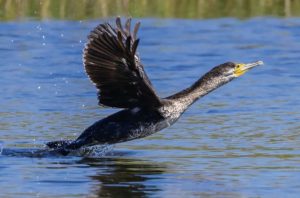
The first of these articles was headed “European Plan for Cormorants”. The article reported that “A groundbreaking European management plan could finally tackle the cormorant crisis devastating UK fisheries, with numbers soaring from 50,000 in the 1970s to more than two million today.
The birds consume an estimated 270,000 tonnes of fish annually across Europe, with UK wintering populations exceeding 64,000, thus putting enormous pressure on fish stocks, stocked fisheries and fragile chalk stream habitats.
The draft “Cormorant Management Plan” developed by the Angling Trust, Professor Ian Cowx, and the European Anglers Alliance, with backing from 35 countries, proposes coordinated action to reduce numbers to sustainable levels.
Key measures include establishing no-cormorant zones in high-risk waters, targeted culling under licence, and action at Baltic breeding sites where many overwintering birds originate.
Mark Owen, head of fisheries at Angling Trust, told Trout & Salmon: “This long-overdue plan could finally give our waters and fisheries a fighting chance. If implemented, it will restore balance to our rivers and lakes, helping ecosystems to thrive once again. Wildlife and anglers alike will benefit, and we can hopefully look forward to healthier fish stocks, and better catch rates in the years ahead.”
Cormorants have been mentioned here in Australia lately as a serious problem now for our trout waters, with suggestions that the poorer than usual fishing in Tasmanian rivers in recent years is partly due to large numbers of cormorants now feeding along the rivers. But when you suggest it might help to thin their population out a bit the official response (at least given to me) was: “So you seriously want to remove a bird that is native to Australia to protect an introduced species??” So, there you go.
The other item of interest in the August issue of Trout & Salmon was this:
Will Fishing be a Crime?
Scottish anglers could face legal action for basic fishing practices under controversial recommendations from a Scottish Government commission that wants to bring fish under the same legal protections as other animals. The Scottish Animal Welfare Commission has called for scrapping the legal exemption that protects “normal course of fishing activities”, following 2022 legislation recognising fish as sentient beings. The commission identifies “tissue trauma from hooks, abrasions and stress from nets” as welfare concerns, and wants fish counted individually as “sentient individuals” rather than by weight.
What could this mean for anglers? Kirk Norbury of Country Sport Scotland warns that fishermen could face legal challenges for “normal and accepted fishing practices such as casting, landing, handling fish, using a net, and releasing them safely”.
Yet the commission’s concerns about fish welfare expose glaring contradictions in existing rules. Current regulations actually prevent salmon anglers from humanely dispatching deeply hooked or bleeding fish, forcing a crueller outcome. “What is truly unacceptable is that salmon anglers are told that if a fish is deeply hooked or bleeding, they are not permitted to humanely dispatch it – instead, they must release it to float downstream, dying a slow death,” said Trout & Salmon editor Andrew Flitcroft. Andrew argues that anglers already lead on fish welfare. “Anglers care more about fish than anyone else,” he said, pointing to “great strides over the past decades in conservation and improved welfare” through “education, self-regulation and peer pressure”.
The Scottish government said it will consider the recommendations “in due course” while acknowledging angling’s economic importance. (Read the SAWC report, Ascribing Sentience to Fish, at gov.scot)
So, there we go. I hope this one doesn’t arrive here to affect our fishing practices. I suspect that many members have similar fishing habits to myself. I thoroughly enjoy fly fishing (that being a given), and mostly fish for trout. Most of the trout we (or at least I) catch in popular rivers near Melbourne tend to be small, and when I hook one I bring it in as quickly as I can, hold it in a wet hand to remove the hook, and then release it back into the water as soon as I can. I use barbless hooks on small flies that do no damage to a fish’s mouth, and I hold fish I have caught facing upstream in the river, so that when they’re released, they invariably scoot off rapidly.
My other confession, following many fish caught in the rivers around Warrnambool when I lived there, was that the trout I caught generally didn’t taste all that wonderful, despite my wife’s best culinary efforts. So often I’d put them back, and purchase some snapper or flathead fillets from a fish shop on the way home.
That way, everyone was happy, including my two fairly sceptical kids who were a bit suspicious of these ‘trout’ I brought home.